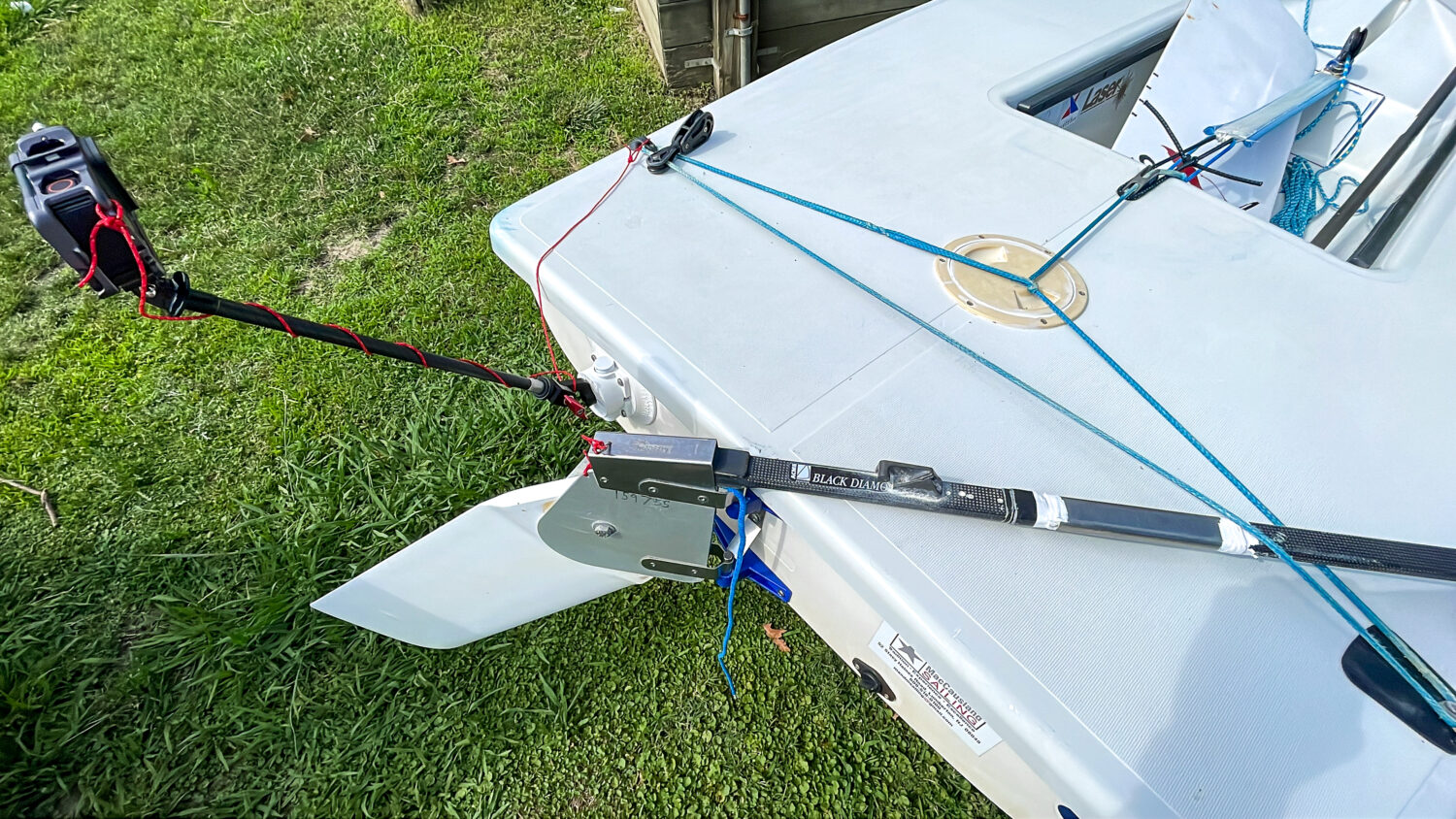
I’ve carried an action camera on my Laser/ILCA while racing and practicing for hundreds of hours over the past decade and a half and I usually stuck with the bow or boom mount. Those were the most secure and most reliable for getting a good shot. While I almost always get a stern view on bigger boats – I’ve only dabbled with getting a stern view on an ILCA. I never really had the hardware right to be reliable with it, and have it positioned to not catch the mainsheet. Another member at our club has doing some filming with an insta360 camera on a Melges 15 and while his solution is more flexible and probably better suited for the Melges 15, I’ve taken some of the components of it to make an even simpler stern-mount rig for the ILCA. I’m using this with an Insta360 Ace Pro, but it would work just as well with a GoPro, DJI Osmo or any similar camera.
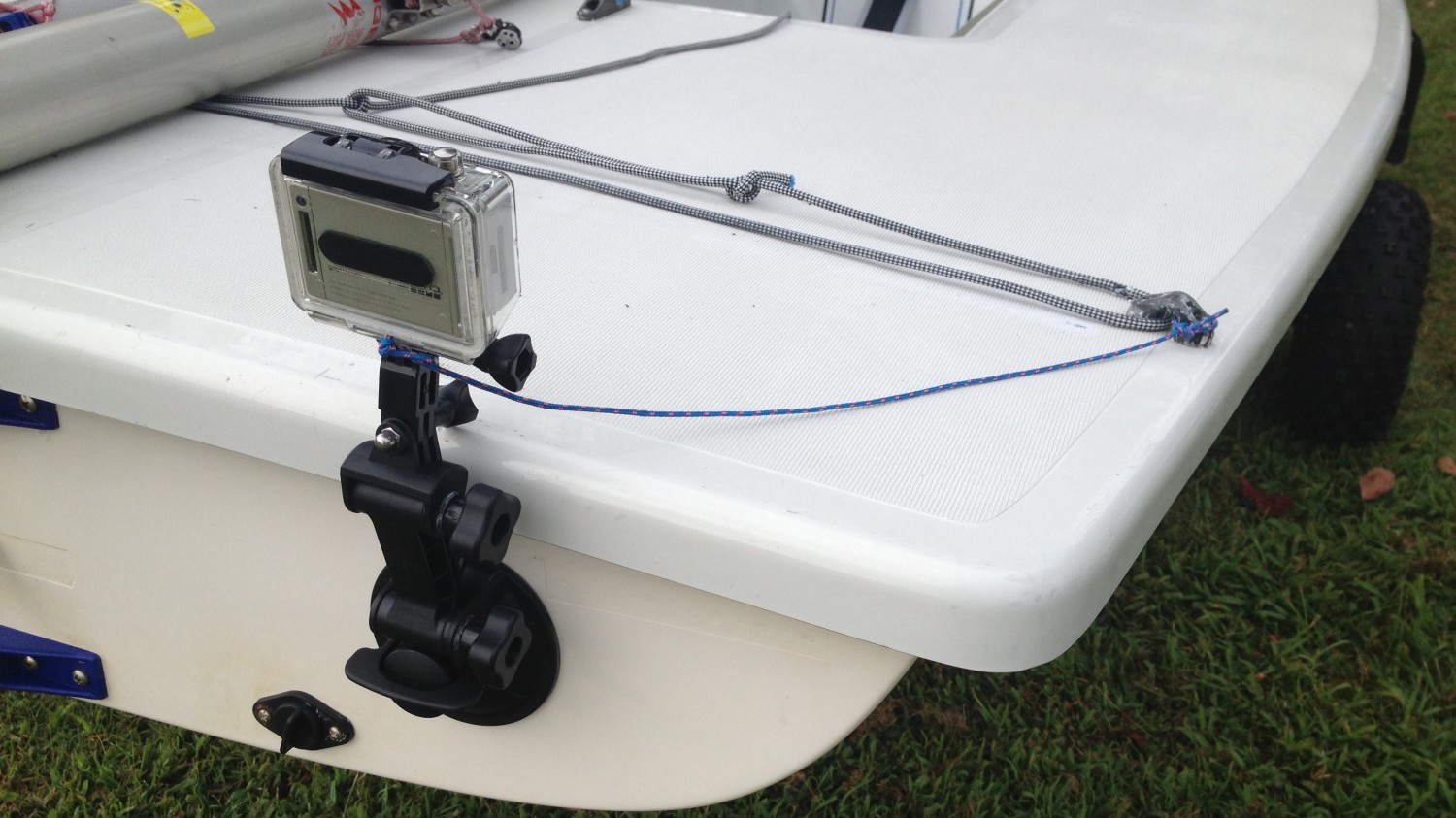
While snagging the mainsheet is still a risk, this does get the camera a little further behind the boat. Note the use of the red safety line – which has certainly proved its worth.
This article also appeared in the Fall 2012 Edition of The Laser Sailor and is now featured here as well. It was written with help from Kyle Martin.
Sport cameras are a relatively new breed of cameras that are compact, waterproof, durable and can be easily mounted on all kinds of surfaces. This makes them great for boats and sailing and especially the Laser. The footage from these cameras is great as a training aid, as a keepsake of your sailing and as a way to share sailing with friends and family – just don’t bore them with 20 minutes of you sailing upwind with nothing happening. Not only do most of these cameras do video, but they can also be used for time lapse photography either to watch the whole series, or just to pick key photos of maneuvers , scenery or technique.
Disclaimer: While great for training and pleasure sailing, cameras are not legal equipment for racing on a Laser.
There are several different brands of cameras on the market each with their own strengths, weaknesses, price points, features etc. Kyle and I both use the GoPro Hero2 cameras, but any of these cameras could be mounted in the shots below.
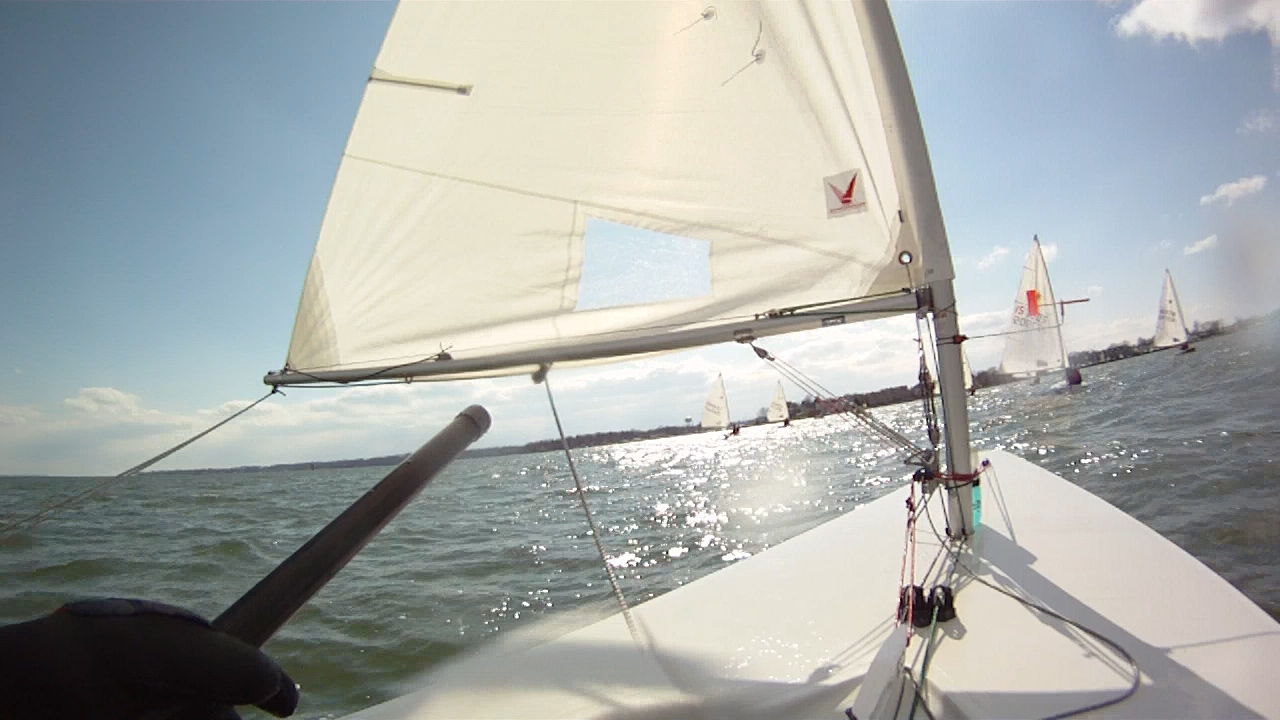
Bow Pro: Easy to set and forget, sees a great scene into the boat and all of the activity in the cockpit Con: Often submerged leaving wet spots on lens, risk of snagging others mainsheet Tip: Use a tripod mount on the bow eye for the most secure attachment. How-to Video
Mast Facing Forward Tip: For best results, angle slightly off center to port. This ‘looks’ ahead around a mark or down the line on a start. Pro: Shows boats ahead of you Con: Boring video if you are in front How-to:Go Pro Mast Mount
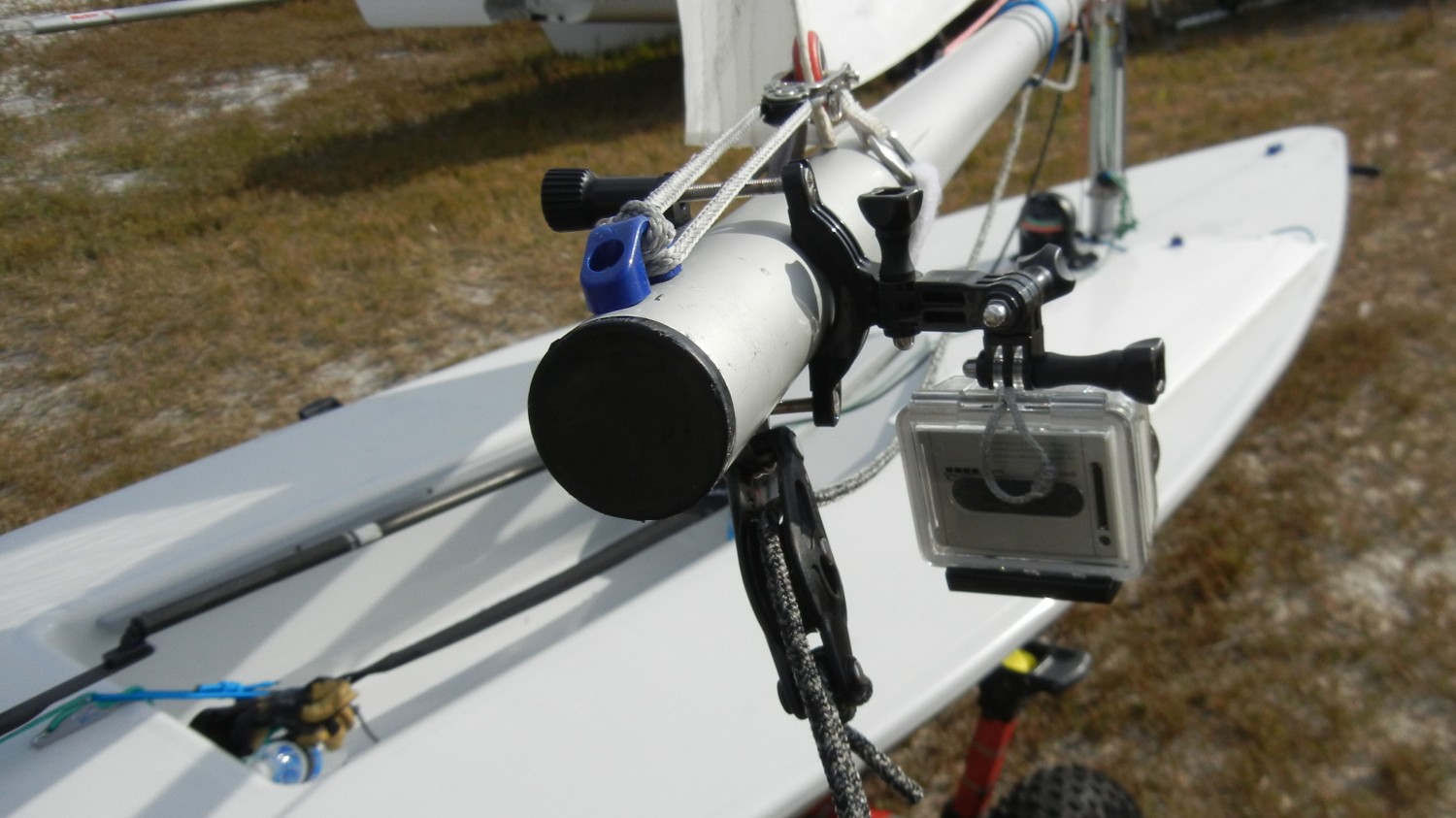
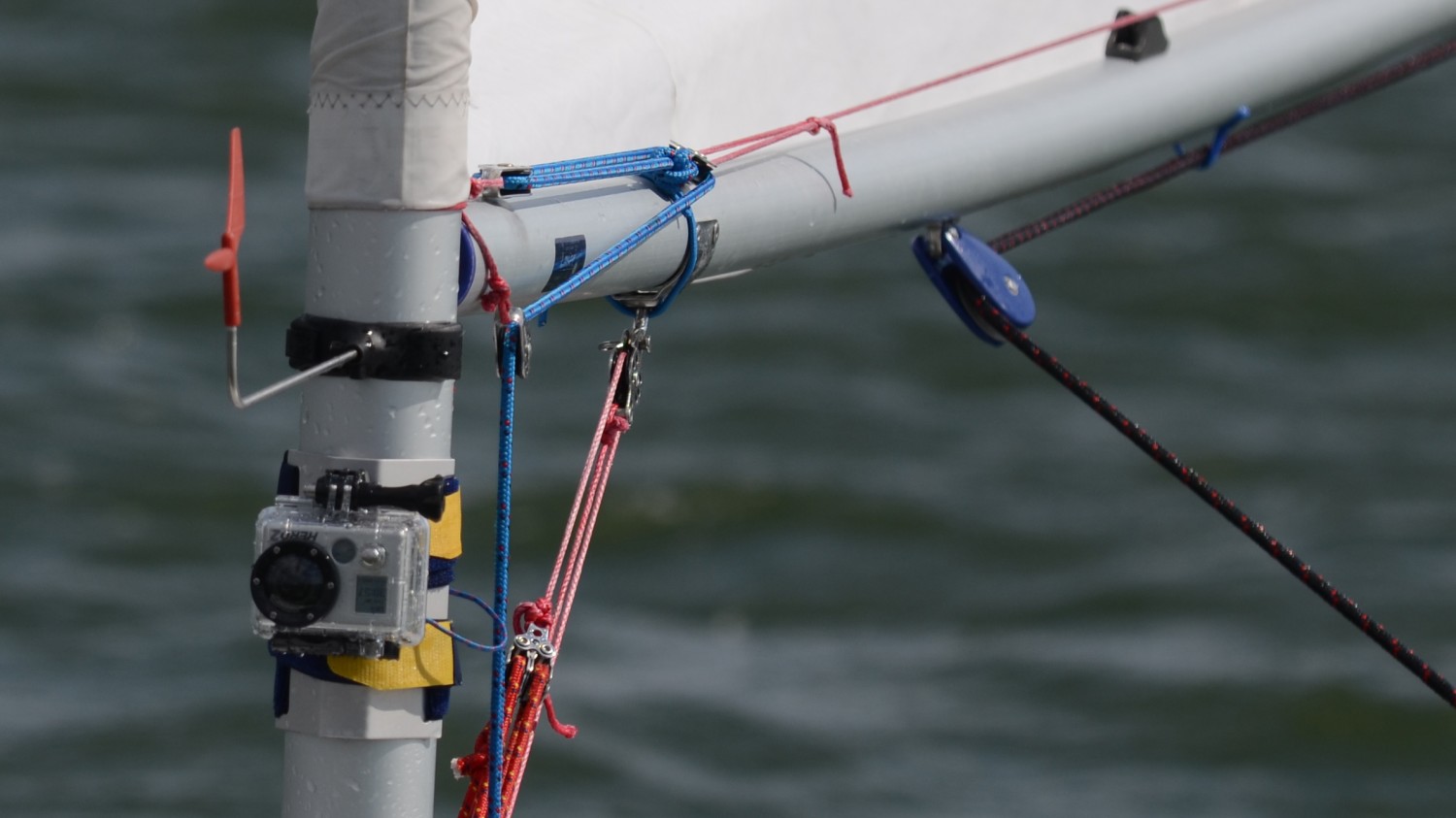
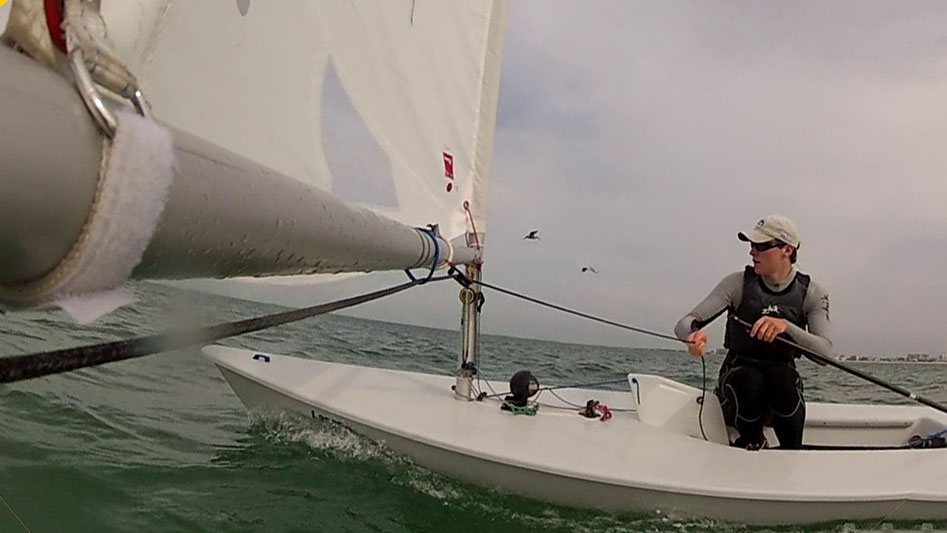
Side Mast Facing Aft Tip: To mount use a roll-cage mount with extra long screws Pro: Similar scene as the bow, but from a higher elevation. Con: Only works upwind
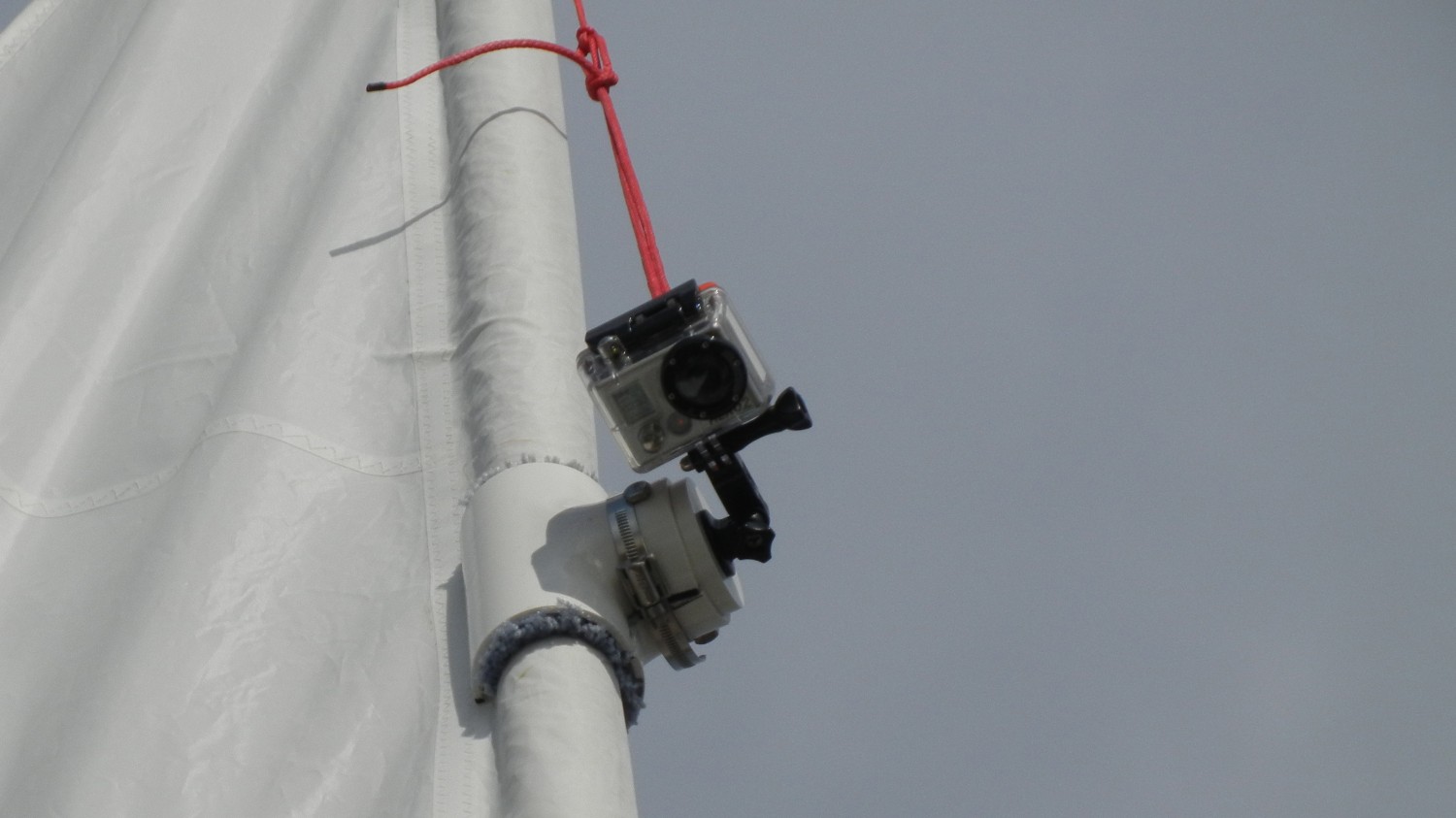
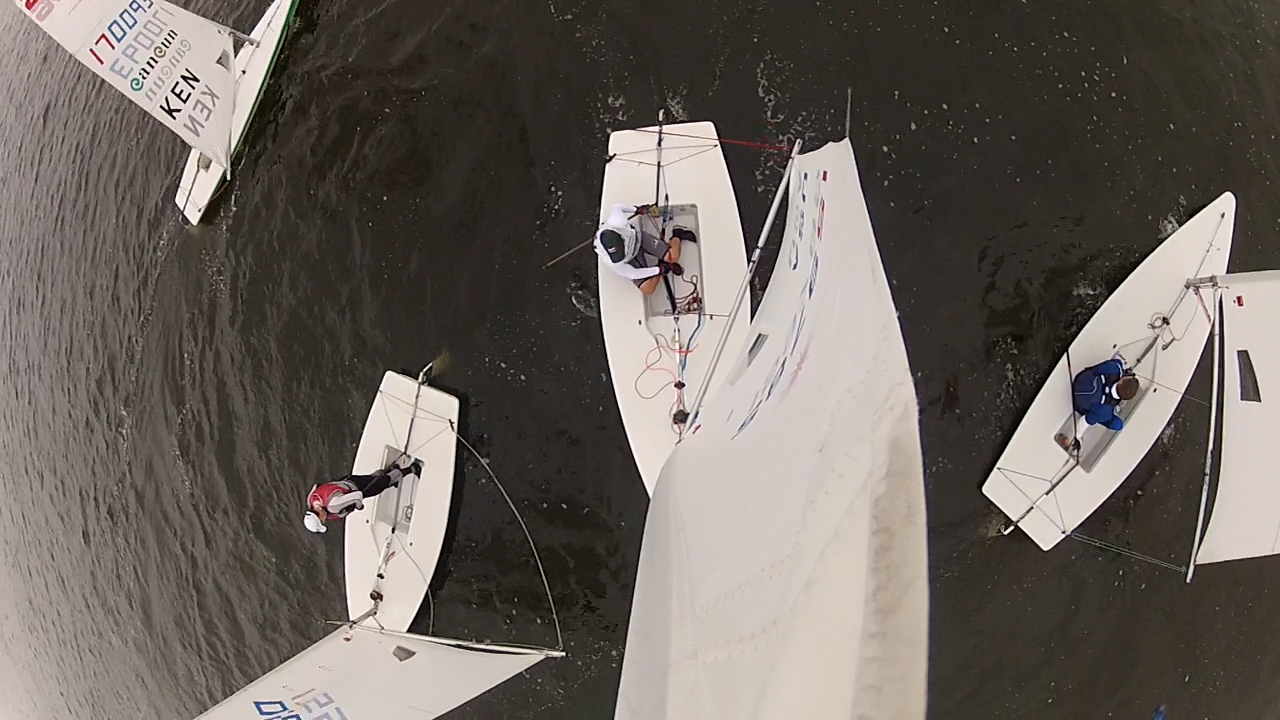
Masthead Pro: Wide view shows boats around and position in cockpit Con: Unsteady in waves, weight aloft
Mid-Mast Pro: Closer view of cockpit than masthead Con: Good video one tack, ok video other tack How-to Video
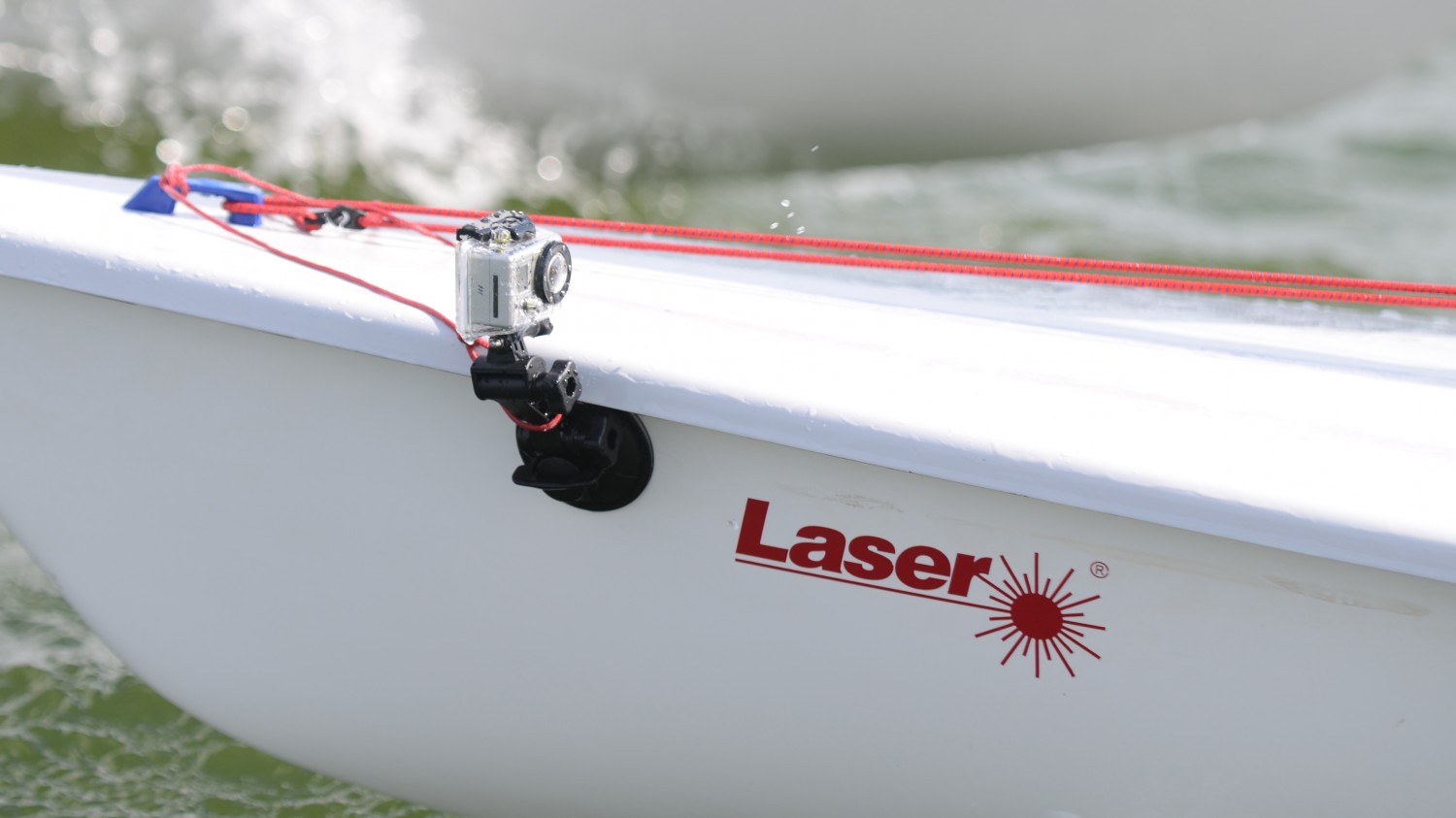
Side of Boat Tip: Use a suction mount on the smooth hull surface. Pro: Interesting angles Con: more likely to be underwater, greater risk of getting banged against something
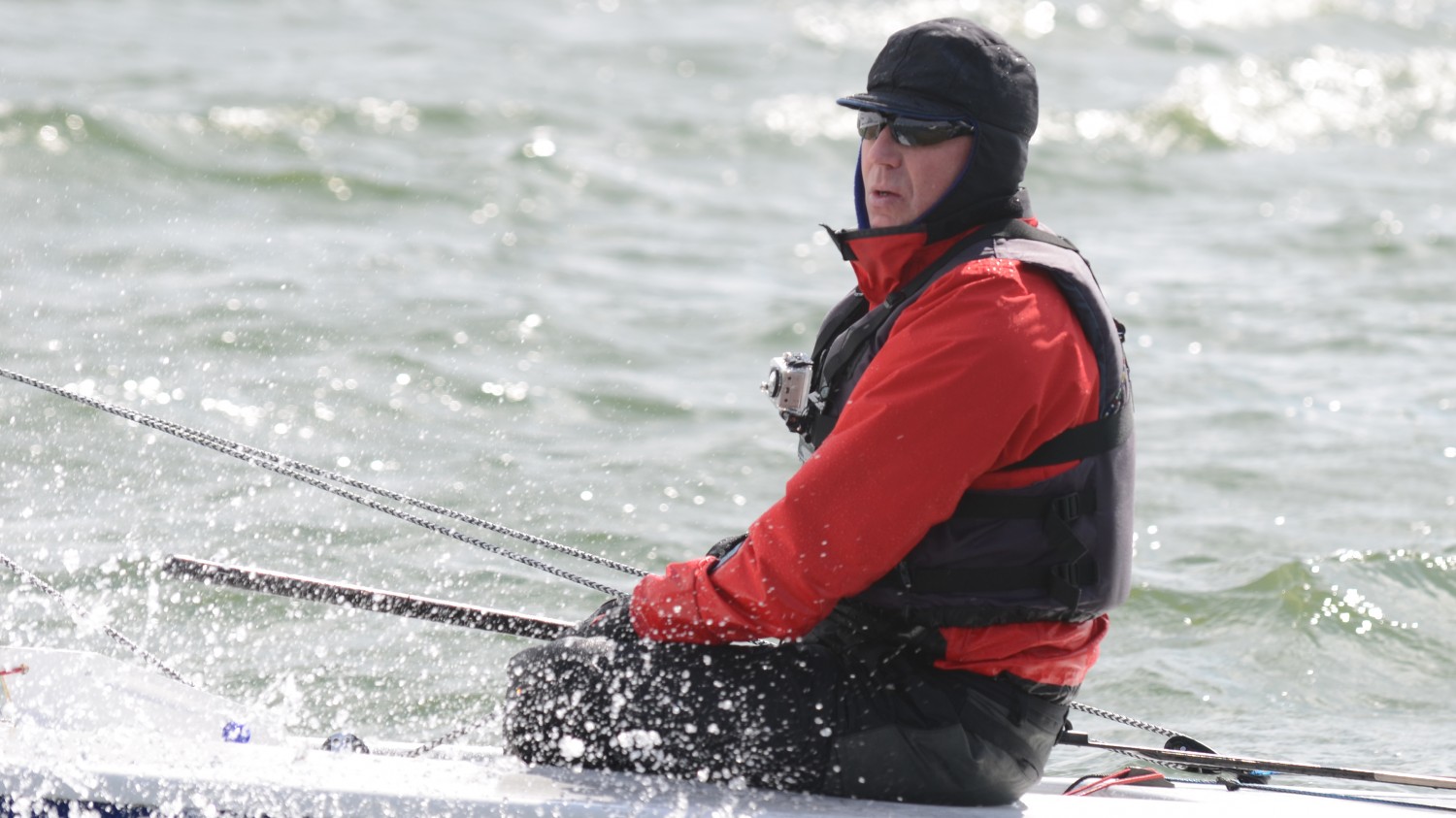
Chest Pro: Great shots of hand-over-hand activity in the cockpit, putting the viewer in your seat Con: easy to obstruct the view with hands or bang camera with tiller extension and hiking out shows all sky
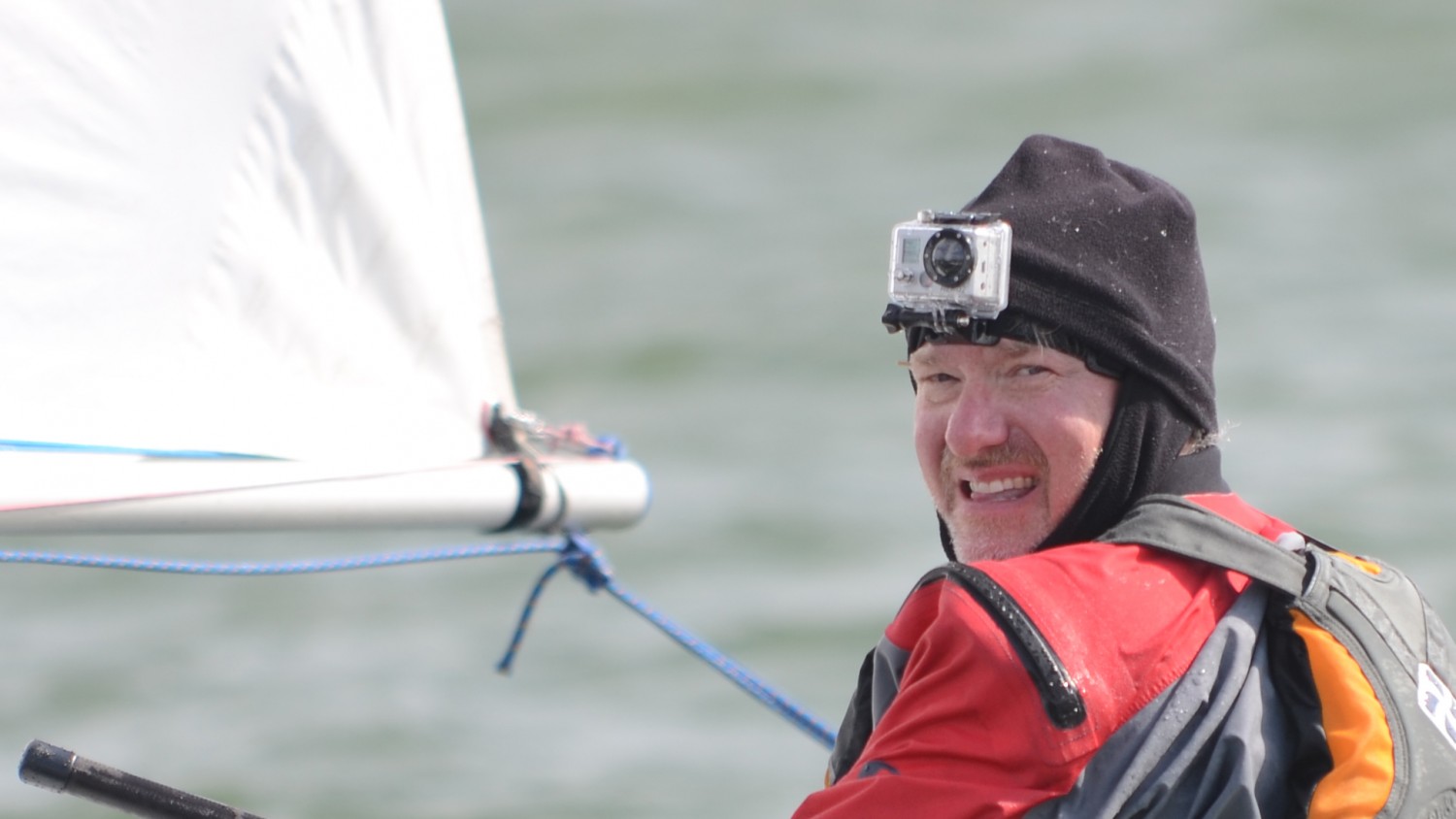
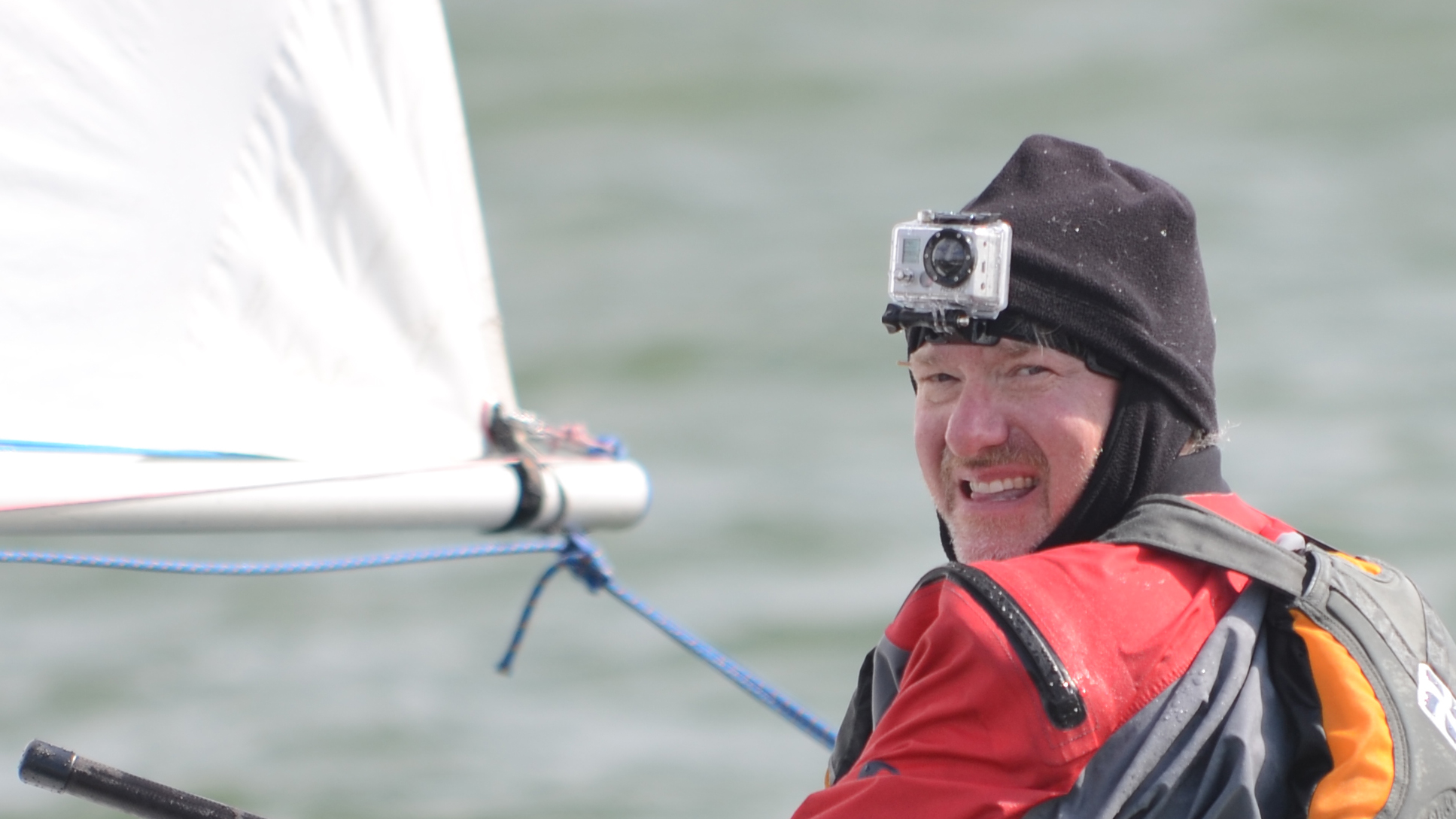
Head Pro: Nice point-of-view shots Con: Scene changes fast as the wearer quickly looks around the boat to sail
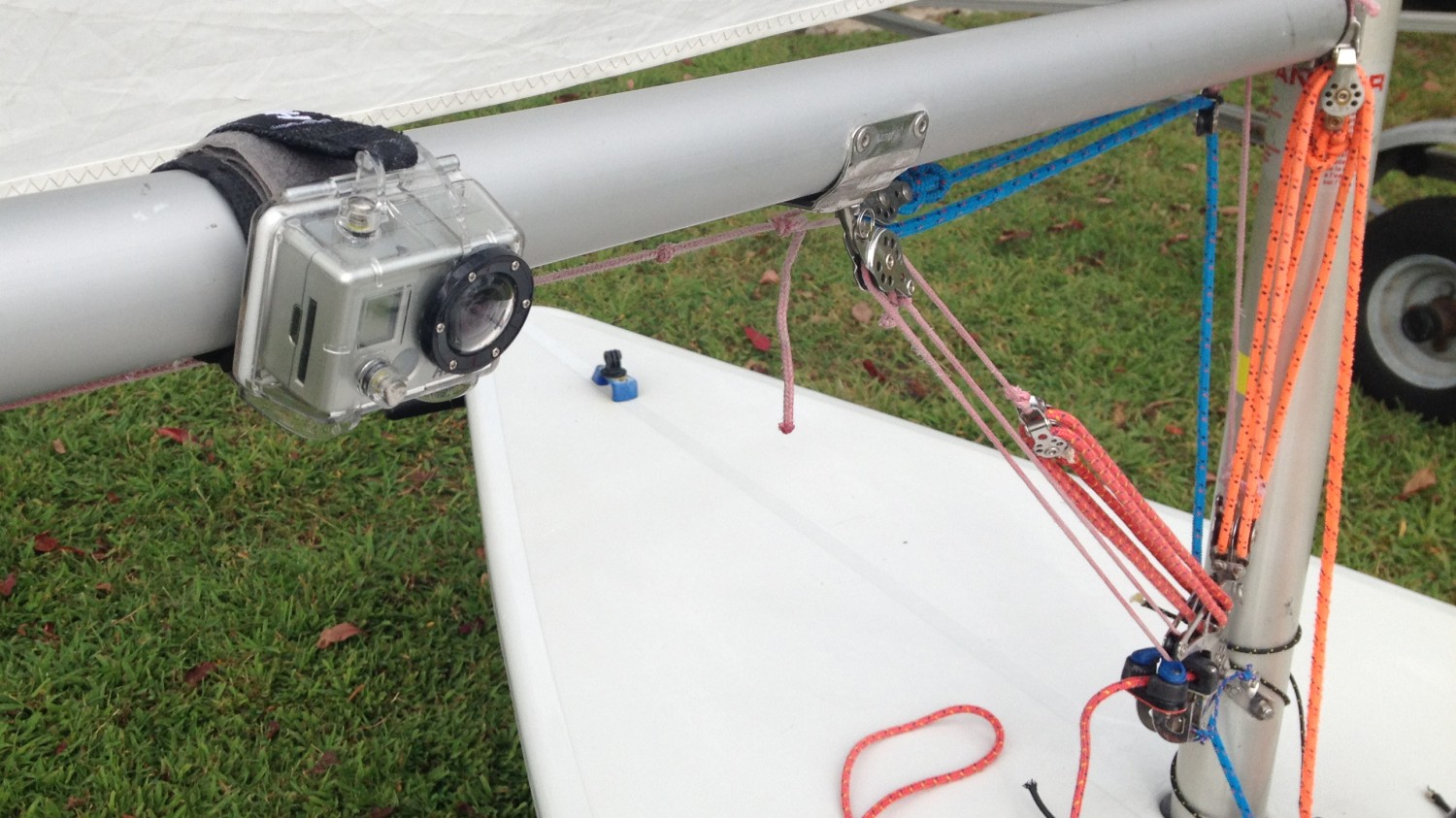
Boom Facing Starboard Tip: Wrist mount fits boom perfectly Pro: Unobstructed rear view downwind Con: Completely obstructed view on port tack by sail
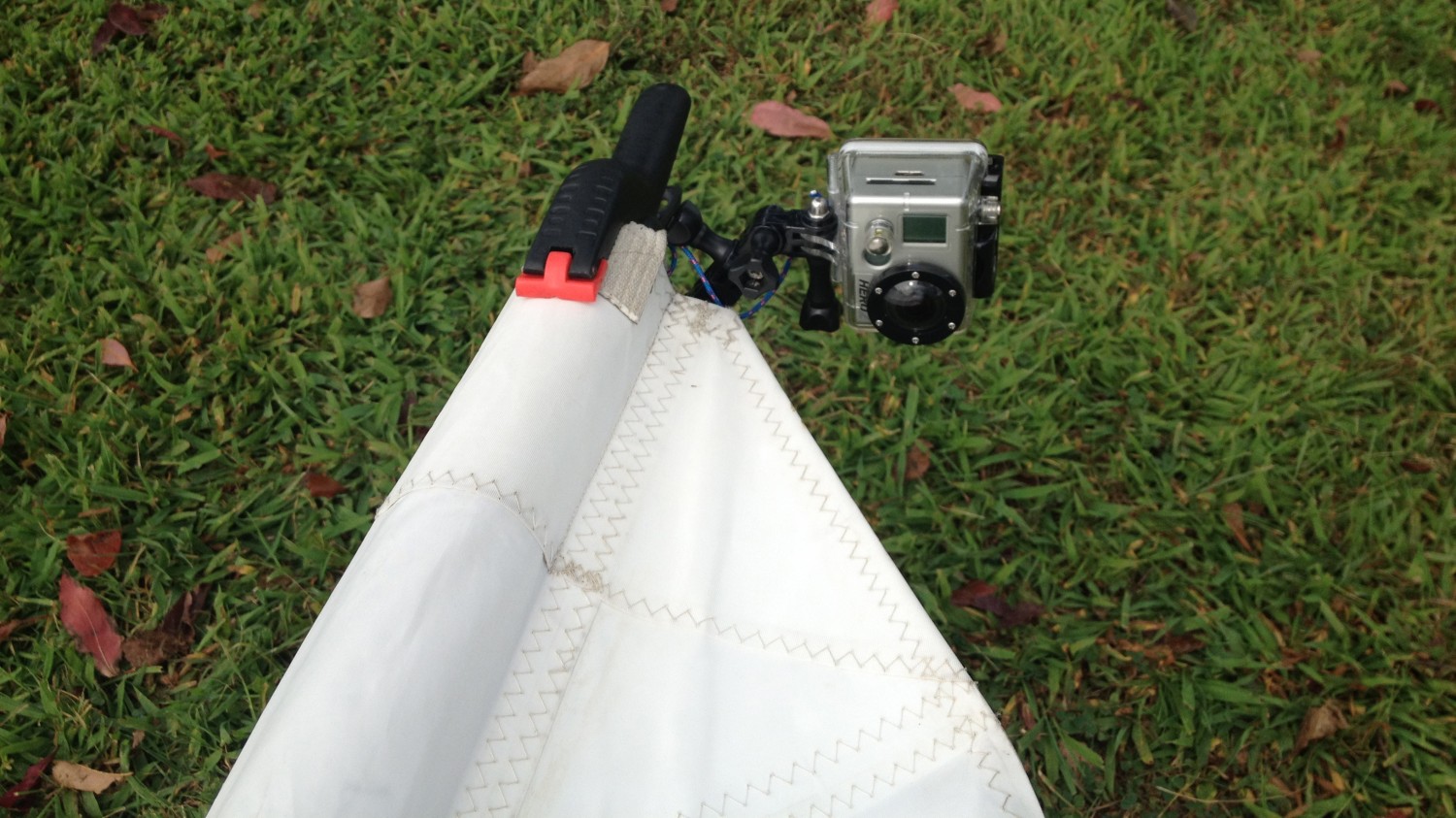
End of Boom Facing Forward Tip: Use roll cage mount Pro: Shows sailor in cockpit and what’s ahead when sailing upwind
Stern Facing Forward Pro: Shows sailor plus what’s ahead Con: Slight risk of snagging your mainsheet Pro: Shows sailor in cockpit and what’s ahead when sailing upwind
Side of Dolly Pro: Can be used right-side up, or down
Jon Deutsch Races Lasers, PHRF boats and anything else he can find to race and usually has a video camera running. Check out his YouTube channel.
Kyle Martin Races Lasers and makes a variety of tips and tricks videos on how to make the most of GoPro Cameras. Check out his tips on his YouTube channel.
Sunday afternoon we made a GoPro mount for the back of a J109 that I’ll be racing in next week at the Annapolis NOOD Regatta.
We took a 8′ white wood curtain rod, fit it in the flag pole and added a GoPro to the top of it. I have yet to add a safety line and bungee tensioner to help keep it from bouncing around. Look for video from this next week.
This GoPro mast mount should work for all mast sizes from a Laser on up. It was modeled after a mount seen on Layline’s website. On a Laser the mount can be used to film what’s ahead, or by putting it to the side and using some extenders can point backwards towards the cockpit. Obviously the mast rotation will result in some less than ideal shooting angles some of the time.
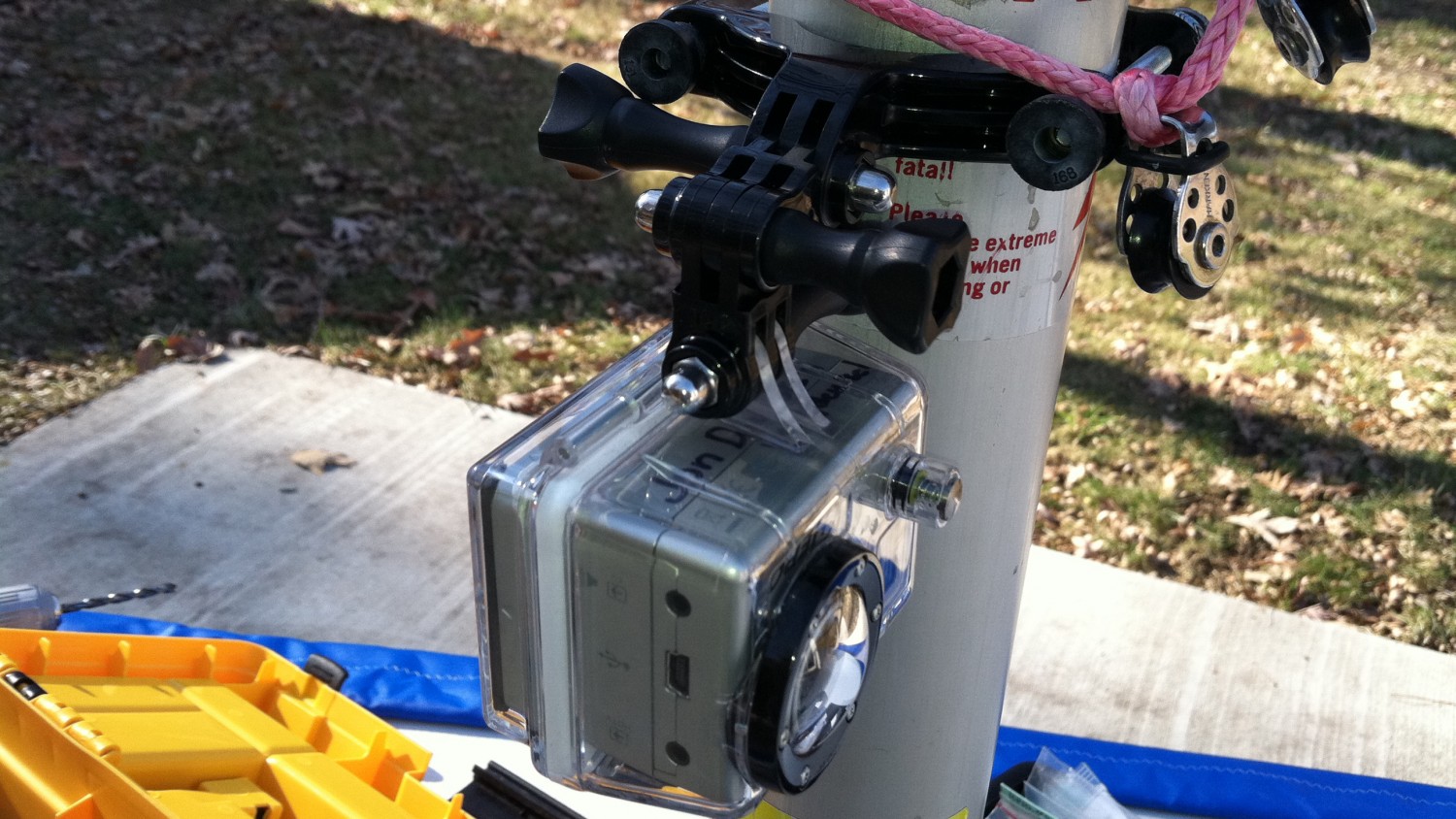
I used an Easy on/off bracket mast mount, but instead of using a stick-on or tripod mount, I drilled out the bracket part of a helmet mount and used two stainless steel bolts to attach it. The other solutions are probably sufficient, but I wanted something that would be bullet proof as I see myself mounting this in some places that I couldn’t exactly get to in a pinch if something went wrong.
A recent project of mine was to use a simple kitchen timer to build a GoPro Camera panoramic time-lapse mount. This basically lets the camera spin 360 degrees to evenly film the surrounding area. Either periodic stills can be taken or video can be recorded that can later be sped up into a time lapse.
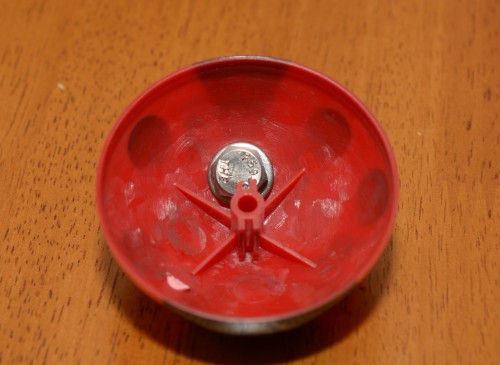
I started with a basic kitchen timer. It’s best to find one that doesn’t have a dial on it. There are numerous egg-shaped timers that seem to work best for it. Stores like Bed Bath & Beyond or Walmart should have them. The first one I found happened to be shaped as a lady bug and cost something like $3.99. The GoPro tripod mount is $8 so with the nut and washers the total was less than $13 to make.
Edit: A more comprehensive list of GoPro mounts and mounting locations for a Laser can be found here.
Saturday I got my boat ready for Frostbiting on Sunday and ultimately for Midwinters in a little over a week. I also put together some mounts for the GoPro camera. I had already mounted the camera to the compass mount that yielded this video from last weekend.
Pictured above is the GoPro mounted to the compass bracket just in front of the compass. This works because most of the time when I’m using the compass I’m hiked out and thus looking at the side markings on the compass. The few times when I actually want to look at the compass head on are usually when I’m checking the wind when I’m not looking and it’s easy enough to just look over the camera.
This picture is of the GoPro mounted to the Laser mast just below the goose neck facing aft on the port side of the boat. The ‘roll cage’ bracket is the right width, but the screws that come with it aren’t long enough to fit the width of the mast. A quick trip to the the hardware store for some longer screws and nuts fixed that.
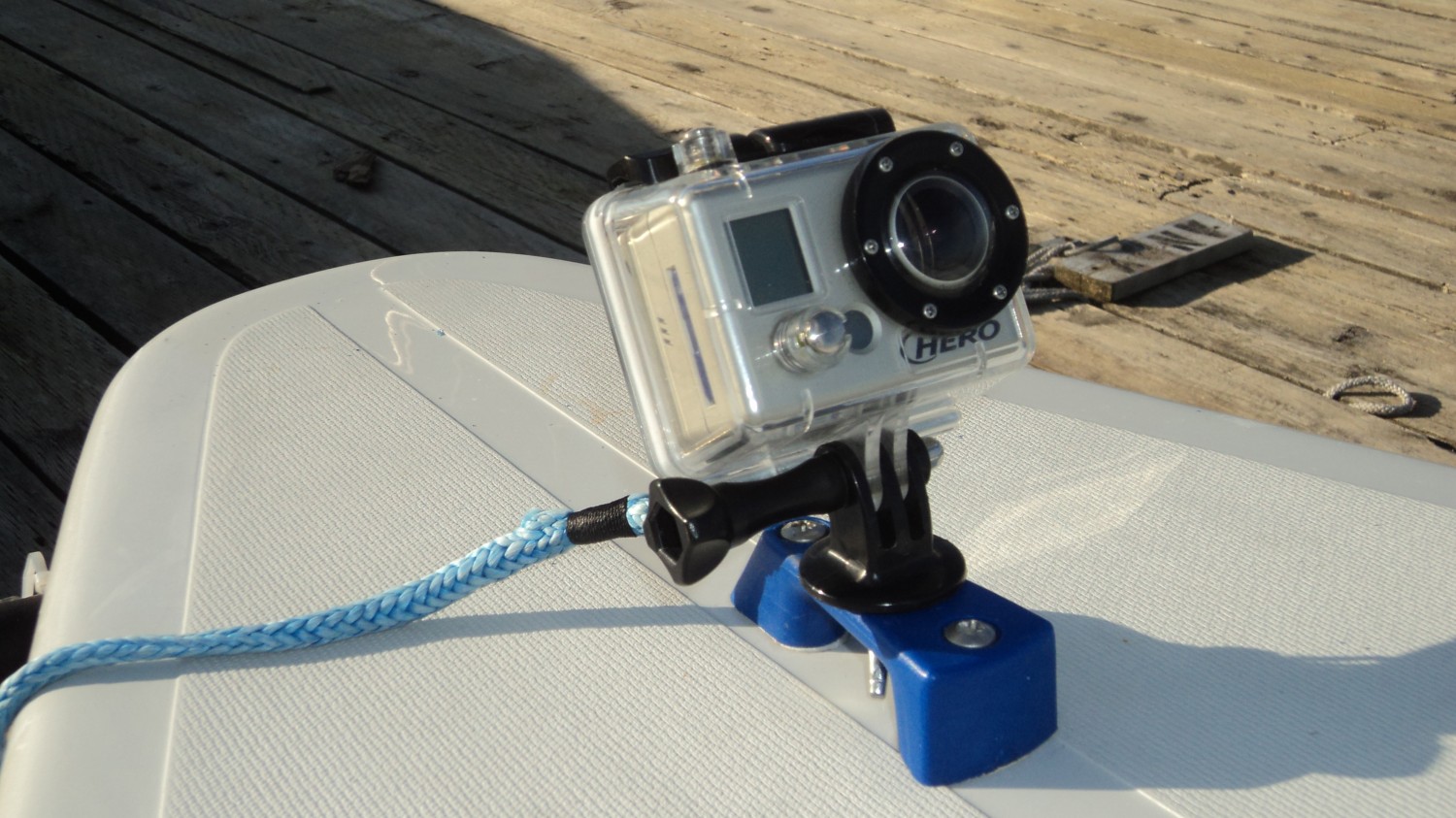
To mount the camera to the bow I drilled a hole in the top of the bow eye and took one of the GoPro tripod mounts and used a bolt from underneath the bow eye to secure it. Pictured is are both the short and tall versions of the setup. The taller version gives a better perspective back to the cockpit, but being taller, it might vibrate a little more. I also plan to wrap both in tape to be sure nothing gets caught on them.
These photos show the clamp mount I made to fix the camera to the top of the mast. I used another tripod mount and bolted it to a hole I made on the side of the clamp. This mount could be used at the top of the mast, the aft end of the boom, or even on the rudder head during training.
The final location I mounted the camera to is the dolly. Normally the dolly rides upside down on top of the boat, so by mounting the camera to the side of it I can video scenes on the way to regattas to help frame the location. When the boat is on the dolly the mount can also be used to film while moving the boat around.





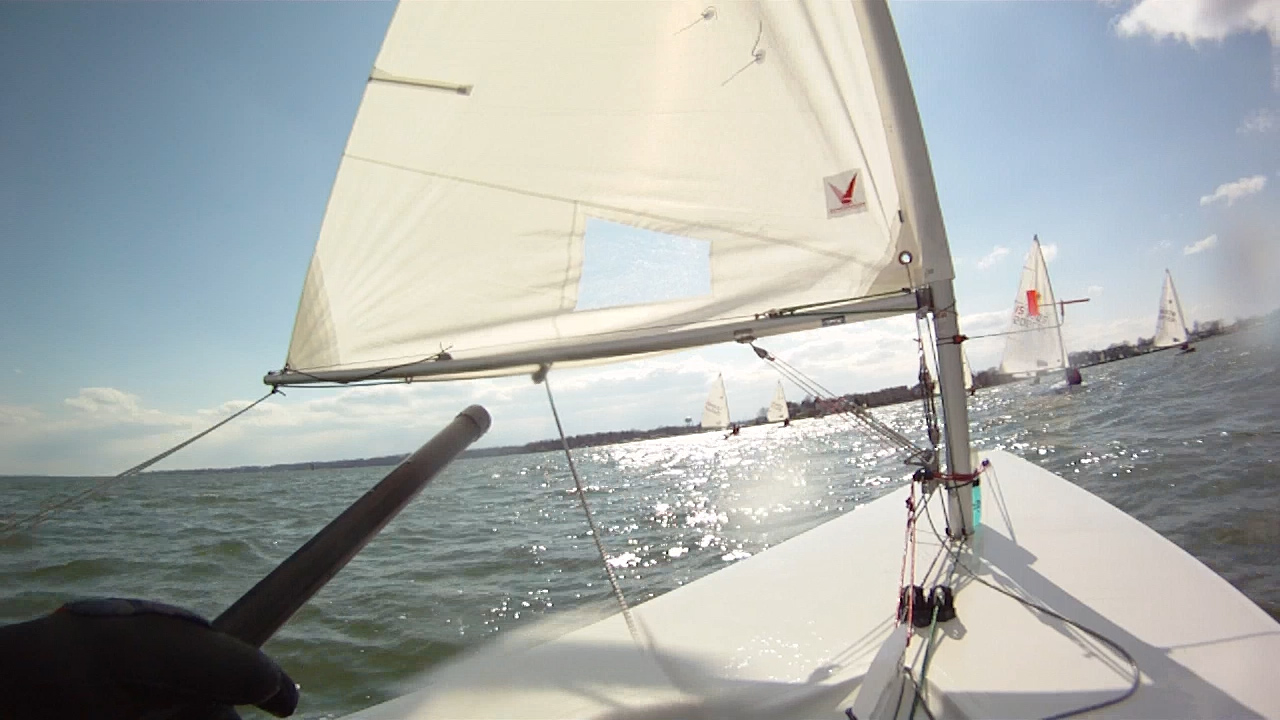




 Mounted on a Laser mast pointed forward
 View pointed forward